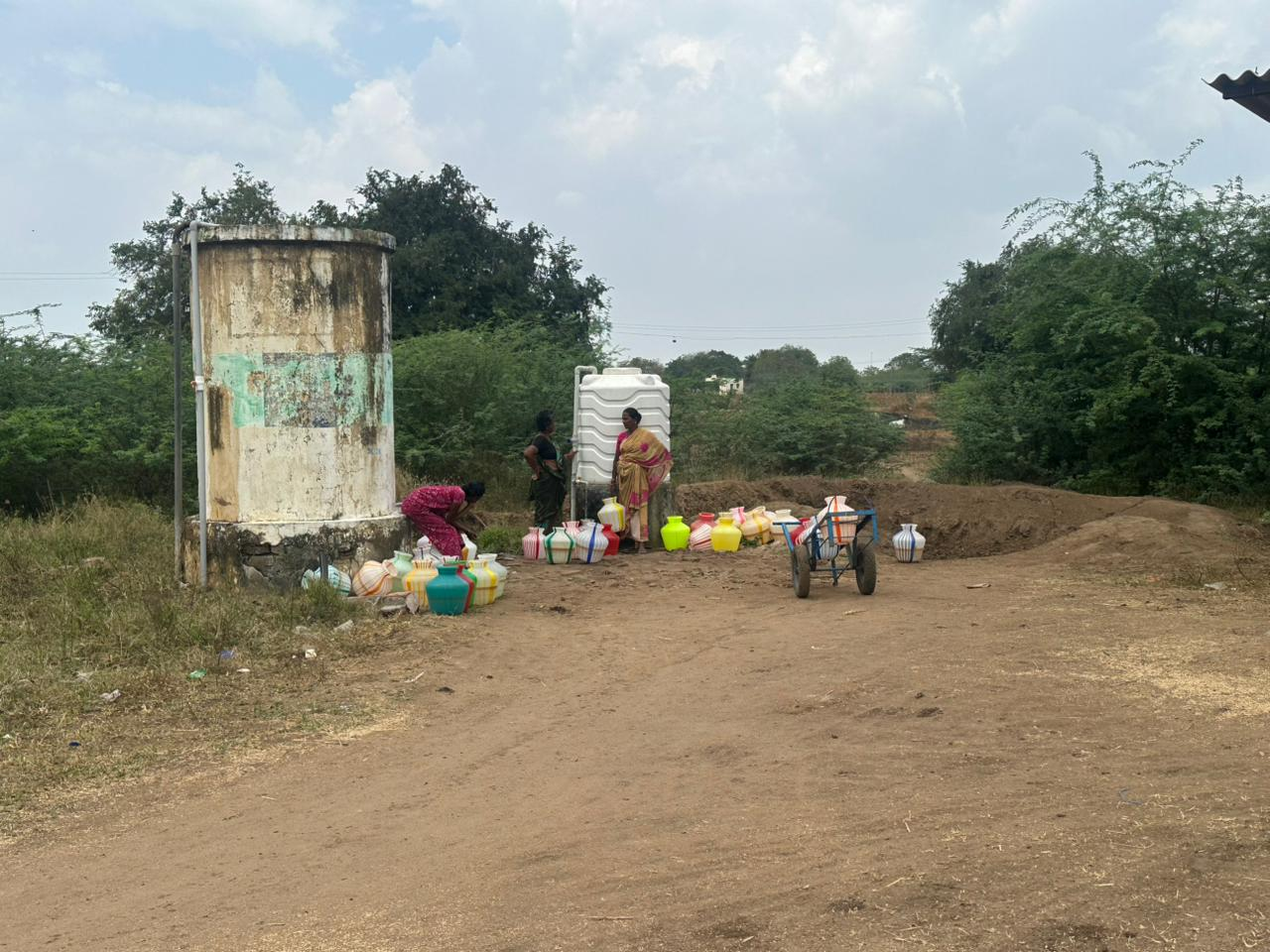
Today is World Water Day, but for the women and girls in the water-constrained Kamuthi block of Ramnad district, it is yet another hot morning, where they brace themselves to face the chaos near the White Water Tank, nearly 400 meters away from the heart of the village. This is where women have to fetch water from for their domestic use. Every household has a pre-cast metal push cart that helps them bring five pots home at a time, an indigenous solution to avoid multiple trips in the hot sun. The things that are given to a new bride when going to her married home, definitely must have one of these, to make things easy, if not better.
A look near the White Water Tank, shows no men as it is only the woman's responsibility in these parts of the world to collect water.
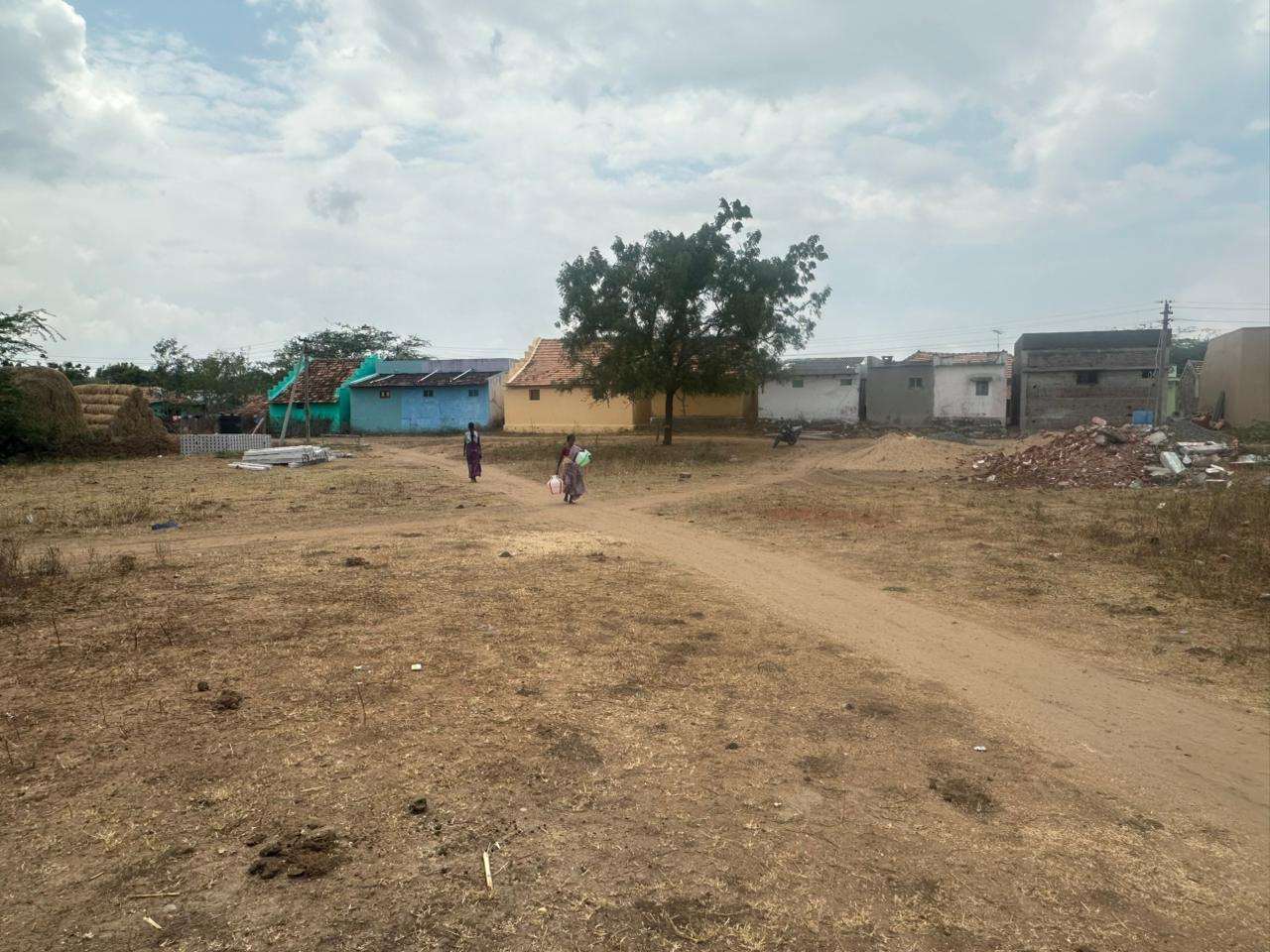
Women walk all the way if they do not have a push cart
Eighteen year old Kamala and Vimala (names changed), did not go to college as there were no proper transport and water facilities in their village. After schooling stopped, the responsibility of collecting water became theirs. Women and girls in the village have "Water Partners" - companions to chat with and support each other during the hard task of collecting water. Kamala and Vimala became ‘water partners’ too. Their houses were in the tail end of the village so the walk was long and weary, pushing the heavey metal cart.
They start their first trip at 9.30 am to the White Water Tank. Each one of them would need a minimum of 15-20 pots to fill the blue barrel in their house for domestic use. While walking to the tank, they discuss the curry they might have for the day while lamenting about the crowd and chaos they are about to witness at the White Water Tank. At the tank, there were already three women, each with their fifteen pots, waiting in the queue.
After an hour waiting, Kamala and Vimala got their turn to fill their pots from the one tap available at the tank. It took them about 10 to 15 minutes each to fill five pots each. The water in the tak was reducing fast, and they better be quick if they needed to collect ten more pots each. Both girls were thin, their collar bones showing, looking malnourished and underweight, and yet they had to draw all their muscle and soul power to push the cart filled with water for the next 450 meters to reach their houses.
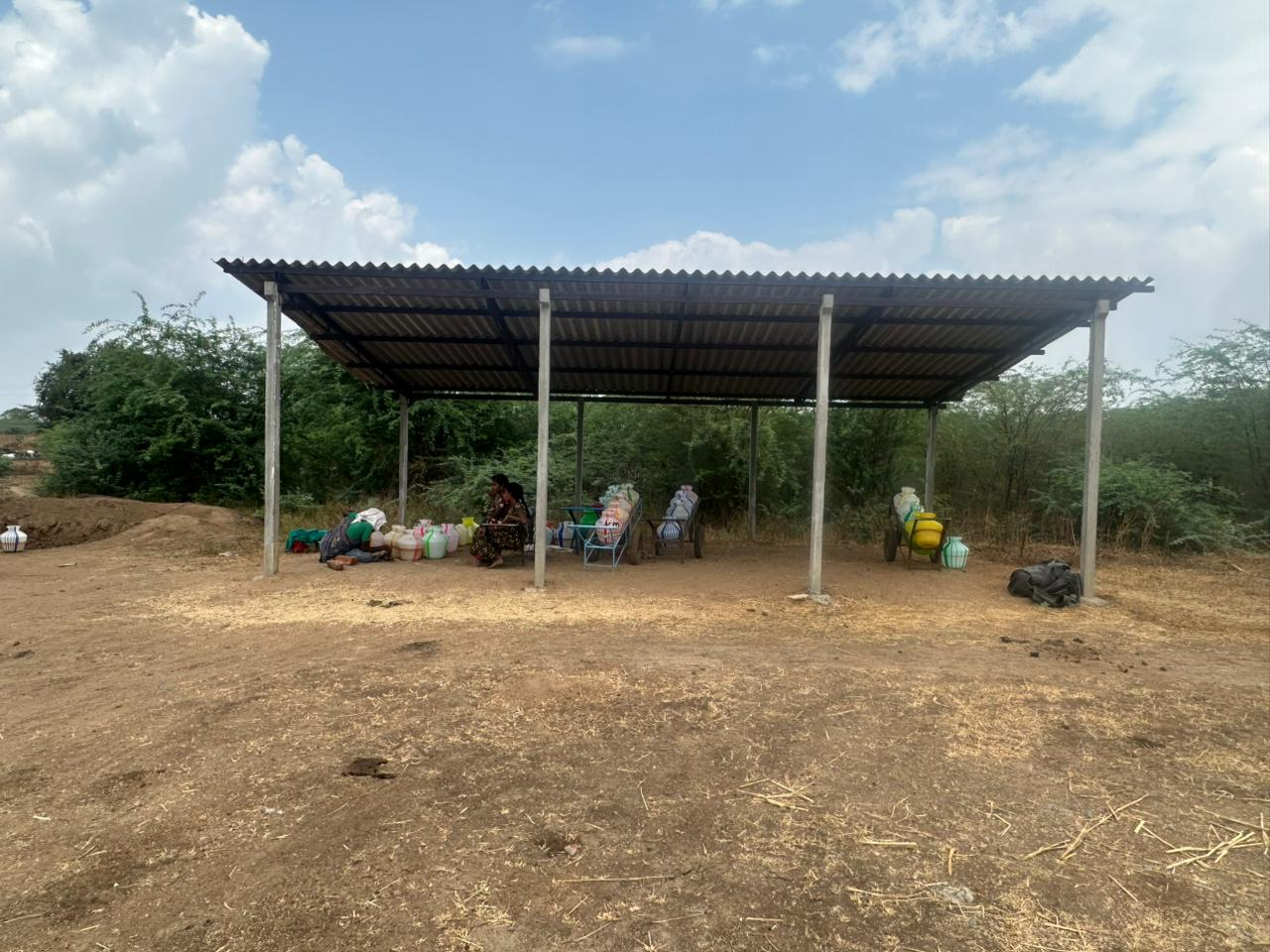
The shade built for women to wait for their turn at the tank
While one was sighing, the other was already ready for the second batch of fetching water with the five empty pots in the push cart. By now, it was 11.30 am. Both girls were walking back, slowly, yet steadily, for the second batch of water from the White Water Tank. And this time the rule had changed. Those who had already collected their first tranche of water had to wait for a while until those who were collecting their first tranche had all collected water and left.
This meant a minimum wait of 30 to 40 minutes, where the women tried to laugh and joke to energise themselves and not mind the hot scorching sun that was drenching them in sweat under the hot tin roof. By the time Kamala and Vimala collected their second tranche, it was already 12.30 pm. The sun was high above their heads, and it was taking longer than usual to push the cart filled with water, so this time they needed a longer break to push the cart, as it was a 20-minute break at the sit-out of their house, just to prepare themselves for the next batch.
The temperature now was about 36°C felt like 40°C, with no breeze around, the thirst and tiredness was evident in the faces of the girls. As they walked back, rubber slippers cracking behind them, there were only a couple of people at the White Water Tank. Older people had already gotten to the house, to start cooking and this helped the girls to collect the third batch faster than before. It was 12.50 pm, but by the time their pots got filled from the slow trickle of water left in the White Water Tank, it was 1.30 pm.
As they poured the last pot of water into the blue barrel, Kamala's mother said, "Why don't you both have lunch and attempt a fourth trip? There might be still some water left in the tank and nobody would be around at this time!"
This is not just the story of Kamala and Vimala, but of every young girl or woman in such villages. Time, dignity and agency are still a distant dream. While this condition has changed in many a village in the country, there are still pockets such as these, where women and girls spend 5-6 hours in a day merely fetching water with no time for education, livelihood or a secure future.
Sanitation First with support from its donors has been working to change the situation in such villages, by creating awareness and agency among people to identify, act upon and safeguard the water resources in the village so that there is better source sustainability, access and women-led water governance that earns them back their dignity and agency. - because "When Water Flows, Gender Equity Grows!"